Why Your Thermostat Setting Isn't the Whole Story
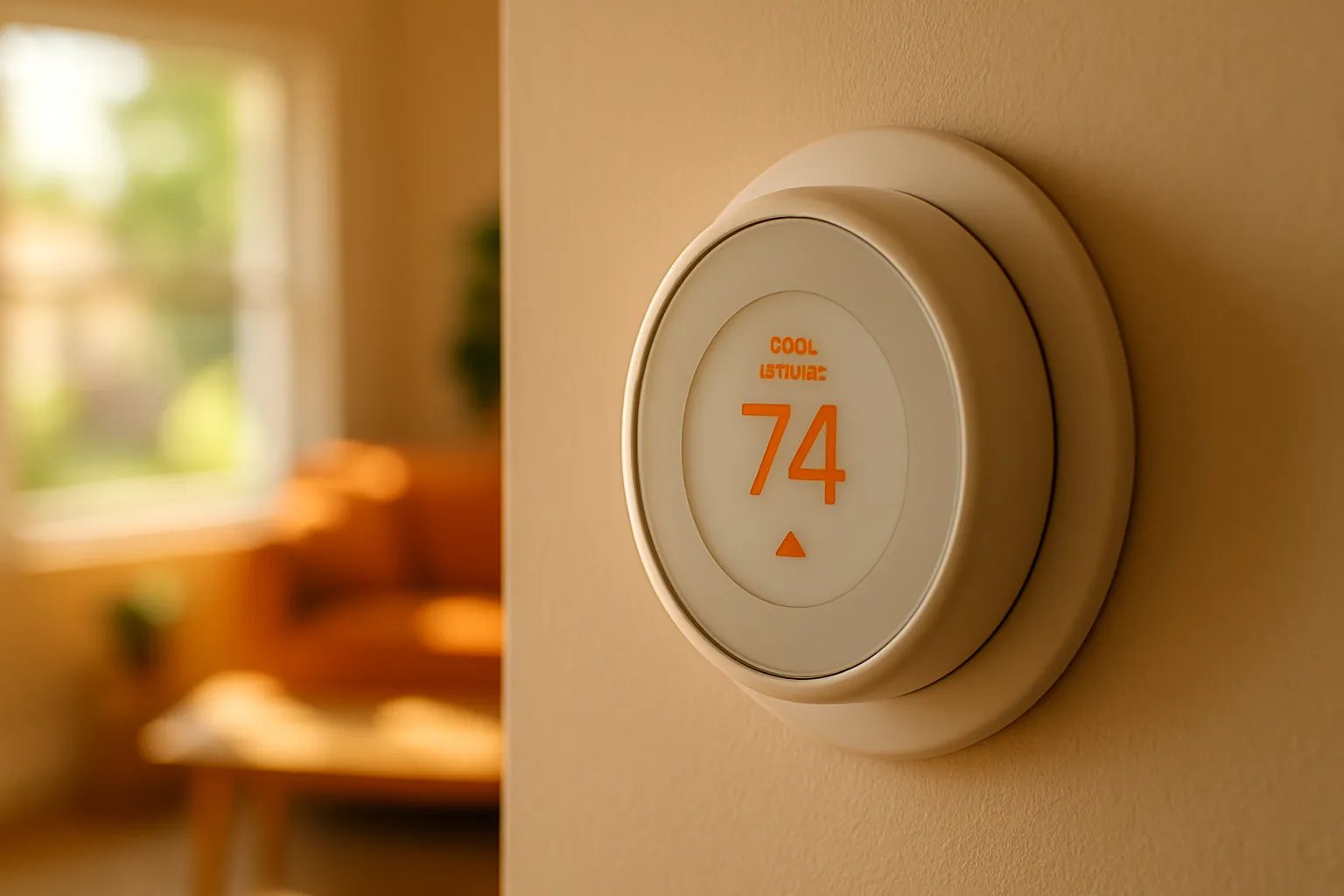
Your thermostat is not in charge of your comfort. It's just a trigger. What happens after that trigger fires is where most homeowners lose the thread, and it's why so many people in Broken Arrow are living with rooms that never quite feel right no matter what number they punch in.
Think of the thermostat as a light switch. Flipping it doesn't tell you anything about the wiring behind the wall, the quality of the bulb, or whether the fixture is even the right size for the room. All it does is send a signal. Your HVAC system has to do the actual work, and that work involves a lot of moving parts that have nothing to do with the number on the screen.
So when a homeowner calls us for ac repair in Broken Arrow and says "I've got it set to 68 and it still feels muggy in here," we're not looking at the thermostat first. We're looking at the system doing the work.
What's Actually Controlling Your Comfort
The first thing we check is airflow. Oklahoma summers are no joke, and a system that can't move air properly is going to underperform no matter how cold it gets at the unit itself. Clogged filters are the obvious culprit, but they're not the only one. Collapsed flex duct, disconnected runs in the attic, vents that have been closed off in unused rooms, a blower motor that's worn down and not spinning at full speed. Any one of those issues chokes the system and leaves you with a thermostat that's technically doing its job and a house that still feels off.
Refrigerant matters just as much. When charge levels drop, the system loses its ability to pull heat and humidity out of the air efficiently. It'll run. The numbers on the thermostat will look fine. But the air coming out of your vents won't feel the way it should, and your humidity levels will creep up in ways you feel before you measure. That heavy, sticky sensation in the middle of your living room in July isn't your imagination. It's usually a sign something's off at the equipment level.
The size of your equipment plays into this too. An oversized unit short-cycles, meaning it blasts cold air and shuts off before it's had time to properly dehumidify the space. An undersized unit runs constantly and still can't keep up during a Broken Arrow heat wave. Neither situation is fixed by adjusting your thermostat. That's an hvac repair or replacement conversation, and it's worth having sooner rather than later.
When to Stop Adjusting and Start Investigating
There's a point where tweaking the thermostat becomes a habit that masks a real problem. If you're adjusting it more than a couple of times a day trying to chase comfort, that's a sign. If your system runs for long stretches without the house reaching the set temperature, that's a sign. If your energy bills are climbing but nothing about your usage has changed, that's definitely a sign.
Furnace repair in Broken Arrow follows the same logic once the seasons change. Homeowners spend October fiddling with the heat setting because their furnace is cycling oddly or certain rooms aren't warming up. The thermostat gets the blame because it's the only part of the system most people interact with. But the problem is almost always somewhere else. A cracked heat exchanger, a dirty flame sensor, restricted airflow from the same duct issues that plagued you all summer.
The system works as a whole. When one part underperforms, the rest compensates until it can't anymore. By the time you're aggressively adjusting your thermostat every day, something has usually been struggling for a while.
The thermostat is the last place to start troubleshooting and the first place most people go. Flip that around and you'll get to the real answer a lot faster.
If your home in Broken Arrow isn't feeling the way your thermostat says it should, Precision HVAC LLC is ready to take a look at what's actually going on. Give us a call or request a quote and we'll get your system running the way it's supposed to.