What Your AC Drain Line Is Quietly Doing to Your Home
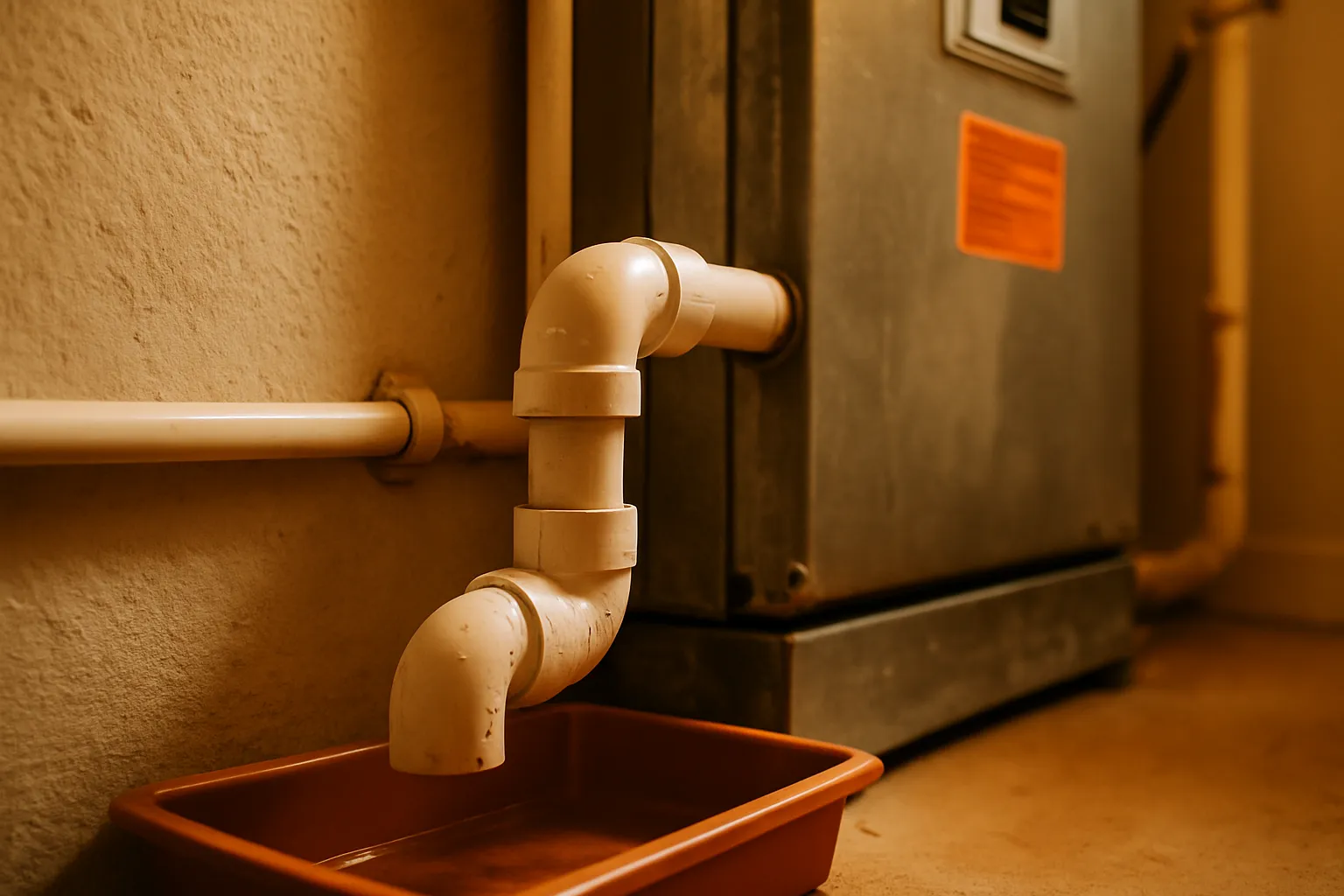
Picture this: it's July in Broken Arrow, the AC has been running hard all day, and you walk into the laundry room to find a small puddle forming near the air handler. Nothing dramatic, no alarms, just water sitting somewhere it shouldn't be. That's usually your first clue that the condensate drain line has a problem.
What the Drain Line Actually Does
Every central AC system pulls humidity out of your indoor air as it cools. That moisture collects on the evaporator coil, drips into a pan underneath, and flows out through a small PVC pipe called the condensate drain line. In a normal Oklahoma summer, a residential system can pull several gallons of water per day out of the air. That's a lot of moisture moving through a fairly narrow tube.
Under normal conditions, you'd never think about this. The water drains outside or into a floor drain, and life goes on. The problem shows up when that line gets blocked.
How Clogs Form and Why They're Common
Algae is the main culprit. The drain line stays cool and damp, which makes it an ideal place for algae and mold to grow. Over time, that growth builds up and eventually restricts the flow. Dirt and debris that get past a worn filter can make things worse. In older systems, sometimes the line develops a sag that lets standing water sit and accelerate the buildup.
This isn't a sign that something was installed wrong or that your system is failing. It's just maintenance reality in a humid climate. Broken Arrow summers give your drain line a serious workout, and without periodic attention, clogs are almost inevitable.
The Warning Signs Worth Knowing
Standing water in the drain pan is the most obvious sign. Most modern systems also have a float switch that will shut the unit off when the pan fills up, so a system that suddenly stops cooling might actually be doing its job protecting your home from water damage. Don't assume the AC just broke.
A musty smell coming from the vents is another flag. If algae is thriving in the drain line, there's a decent chance mold has set up near the coil or in the pan as well. That smell tends to get worse as the system runs because it's pushing conditioned air past the source. You might also notice your indoor humidity feels higher than it should even though the system is running. A partially blocked drain can slow moisture removal and leave the air feeling sticky.
Water stains on the ceiling or walls near the air handler are a more serious version of this problem. That typically means the pan overflowed or the line backed up into the unit itself. At that point you're dealing with potential drywall damage and a repair job that's grown beyond just the HVAC system.
What a Technician Does About It
Clearing a drain line usually involves flushing it with a wet-vac or running a solution through it to break up the algae. A technician will also check the float switch, inspect the pan for cracks, and make sure the line has proper slope so water doesn't sit and breed another clog. Some homeowners do basic maintenance with a cup of diluted bleach poured into the access port, and that can help between professional visits. But if you're already seeing water, a proper service call is the smarter move.
During a full AC maintenance visit, this is one of the items a good tech checks every time. It's not glamorous work, but it's the kind of thing that keeps a small issue from turning into a soggy ceiling.
If you're seeing water near your air handler or your system shut off unexpectedly, don't wait it out. Precision HVAC LLC serves Broken Arrow and the surrounding area for AC repair and maintenance. Give us a call or request a quote and we'll get it sorted out.